Ants are a diverse group of social insects commonly found in the Las Vegas area. These industrious creatures play important roles in the ecosystem, such as aerating soil and recycling nutrients. Ants are recognized by their elbowed antennae, segmented bodies, and the presence of a constriction called a petiole that forms a distinct “waist.” While many ants are harmless, some species can bite or sting. This article highlights some of the most common, conspicuous, and interesting ant species found around Las Vegas.
Common Ants in Las Vegas
Argentine Ants (Linepithema humile) are small, light to dark brown ants that are about 2.2-2.8 mm long. These ants are known for forming massive colonies with multiple queens. They are commonly found in urban areas, nesting in moist environments such as under buildings, along sidewalks, and near water sources. Argentine ants are aggressive and displace native ant species, making them a significant pest.
Carpenter Ants (Camponotus spp.) are large ants, ranging from 6 to 12 mm in length, and are usually black or reddish-black. These ants do not eat wood but excavate it to create nests, which can cause structural damage to buildings. Carpenter ants prefer damp, decaying wood and are often found in forests, tree stumps, and occasionally in homes.
Crazy Ants (Paratrechina longicornis) are medium-sized ants about 2.3-3 mm long with a dark brown to black color. Named for their erratic and fast movements, crazy ants have long legs and antennae. They nest in various locations, including soil, rotten wood, and under debris. These ants can form large colonies and are known to invade homes and other structures.
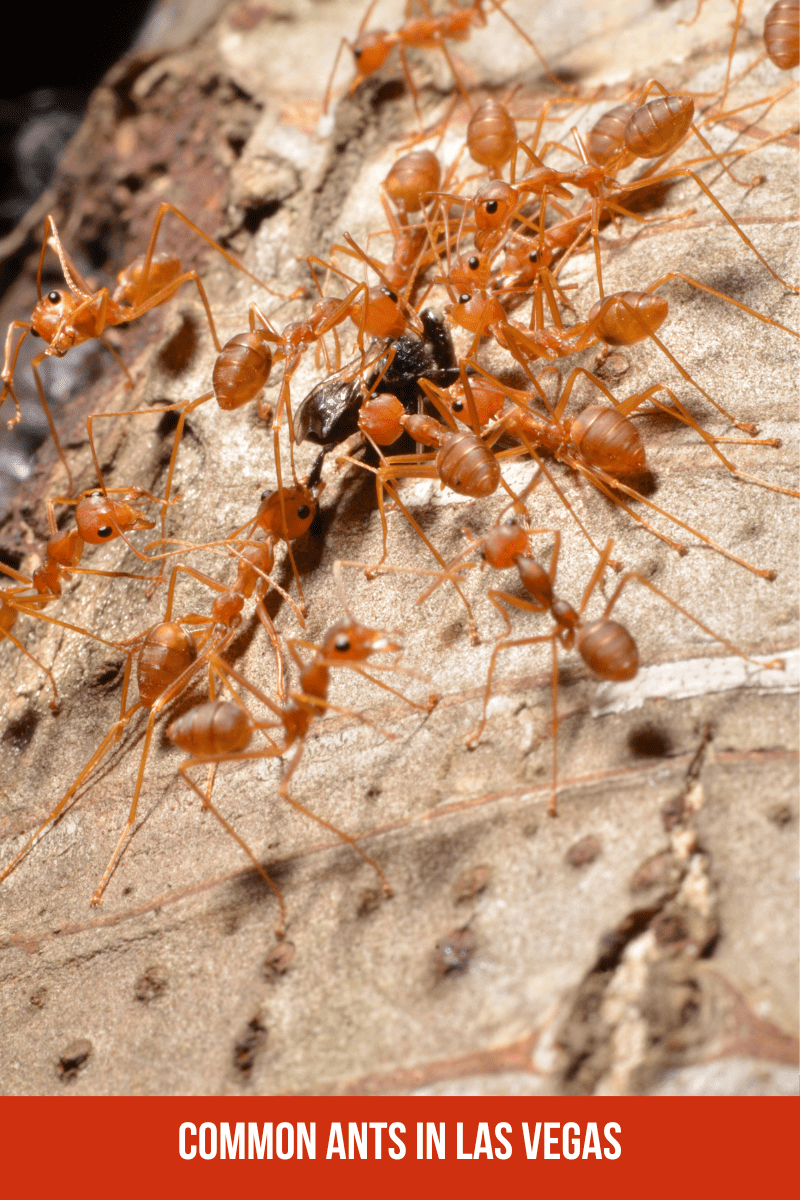
Fire Ants (Solenopsis invicta) are small, reddish-brown ants, typically 2-6 mm in length. These ants are notorious for their painful stings, which can cause severe allergic reactions in some individuals. Fire ants build large, dome-shaped mounds in open areas and can be very aggressive when their nests are disturbed. They are commonly found in lawns, gardens, and other sunny areas.
Harvester Ants (Pogonomyrmex spp.) are medium to large ants, ranging from 6 to 10 mm in length, and are usually red or brown. Known for their habit of collecting seeds, harvester ants create large, conspicuous nests with clear foraging trails leading away from the nest. They prefer open, arid environments and are commonly found in deserts and grasslands. Their stings can be painful and are used to defend their nests.
Odorous House Ants (Tapinoma sessile) are small ants about 2.4-3.3 mm long, with a dark brown to black color. When crushed, they emit a distinctive odor often described as rotten coconut. These ants are highly adaptable and can nest in a variety of locations, including soil, under rocks, and within buildings. They are known for their preference for sweet foods and can become a nuisance in homes.
Pavement Ants (Tetramorium caespitum) are small, dark brown to black ants, approximately 2.5-4 mm in length. They are commonly found nesting in cracks in pavement, under stones, and along building foundations. Pavement ants are known for their aggressive behavior towards other ant species and can often be seen engaging in territorial battles. They are omnivorous and forage for a variety of foods, including sweets, grease, and dead insects.
Velvet Ants (Dasymutilla spp.) are not true ants but rather a type of wasp. Females are wingless, hairy, and often brightly colored with patterns of red, orange, black, and white, while males have wings and can fly. Velvet ants are known for their painful sting, which has earned them the nickname “cow killer.” They are solitary insects and can be found running on the ground in sandy, open areas. Despite their intimidating appearance, velvet ants are not aggressive and will try to escape if threatened.
- Red Velvet Ant (Dasymutilla spp.) is a specific type of velvet ant with bright red and black coloration. These ants are about 6-20 mm in length and are known for their painful sting. They are solitary and can be found in sandy areas where they search for their host, usually ground-nesting bees and wasps.
- Thistledown Velvet Ant (Dasymutilla gloriosa) is another species of velvet ant, notable for its white, fluffy appearance that resembles thistledown. These ants are about 8-15 mm long and are usually found in desert regions. Like other velvet ants, the females are wingless and can deliver a painful sting, while males are winged and do not sting.
Las Vegas hosts a diverse array of ant species, each with unique behaviors and ecological roles. Understanding the characteristics and habits of these common ants can help in managing their presence and appreciating their contributions to the environment.
yt mp4 converter
Sunday 4th of August 2024
I do trust all the ideas youve presented in your post They are really convincing and will definitely work Nonetheless the posts are too short for newbies May just you please lengthen them a bit from next time Thank you for the post